In this video, I introduce you to the Founder of Heray Spice, a Chicago-based company working closely with a cooperative of farmers across his native Afghanistan to source the most beautiful, high quality saffron you’ll find (among other lovely ingredients such as wild cumin, and more). Listen in to Mohammed’s story as well as journey to becoming an entrepreneur and social impact leader. We discuss a lot of great things in this piece- it’s one of my favorites to date! Please leave your comments over on YouTube below the video and be sure to give us a like and subscribe to my channel.
This is my version of Karak Chai, a milky tea popular in Gulf countries and South Asia, this one utilizing beautifully aromatic saffron by Heray Spice, a Chicago-based company, sourcing their products from farmer cooperatives all throughout Afghanistan.
It’s less sweet, as I’ve opted to swap out milk + sugar (you can also use honey) for the typically used sweetened condensed milk in this recipe: What makes this extra special? The Afghan saffron by Heray Spice.
To make Milky & Sweet Saffron Tea, use the following ingredients
Makes 2 teacups
Ingredients
1/8 teaspoon Heray Spice Saffron, soaked in 1/2 cup warm water for at least 10 minutes
5 cardamom pods, crushed
2 black tea bags (English Breakfast is perfect). You can also use loose tea, but you will have to strain the final mixture well.
1 cup whole milk
1/2 teaspoon raw cane sugar, or to taste. You can also use honey, but add this at the end when the tea has cooled somewhat.
Directions
In a small saucepan, bring the water-soaked saffron to a boil. Add the cardamon and the tea bags and continue to boil for 1-2 minutes.
Add the milk and lower the heat to medium simmer. Cook for an additional 2-3 minutes, adding the sugar in the meantime.
Pour the mixture into teacups immediately before serving.
Several months ago, I was approached by Mohammad Salehi, Founder and Owner of Heray Spice, asking me to try his saffron. So often I’m approached by a variety of vendors of really great products- some better than others and some more interesting than others. Mohammad’s products are fantastic, but his story is something I appreciated even more.
(To listen to Mohammad’s full story, join our podcast on Aug. 30. You can subscribe to my new Everyday Mediterranean Newsletter on Substack to get the update.
As he explained to me, he’s from Afghanistan and never thought he would start a saffron business, but once he came to the U.S. he quickly saw a gap in the market for high quality saffron, and a way that he could sustainably and ethically source this rare, fragrant and much-loved ‘spice’ by working with a variety of farmers throughout his country. And that is pretty much the sum of parts in how Heray Spice was formed. On the daily, I see his persistence and hustle and how much passion and belief he has in his products, but most of all I see how determined he is to help those back in his home country to live with honorable work, as well as to provide those in his new country to experience pure ingredients that not only enhance one’s cooking but also one’s health.
Products
Heray Spice, although most known for their high-quality authentic saffron, also sells this amazing wild cumin that is just perfect for cooking your favorite Middle Eastern recipes. I love that it comes whole because you can roast and grind them fresh for the earthiest flavors possible in your recipes.
Harissa Spice Blend is a wonderfully aromatic blend of Afghan spices unique to Heray Spice.
Contact Information
To follow, contact, or order Heray Spice blends or individually bottled spices:
You can often find Mohammad and his Heray Spice products in and around Chicagoland where their family business is based. He is often seen at shows, conferences and farmers markets displaying and selling his products beautifully. How delightful to experience these spices in person!
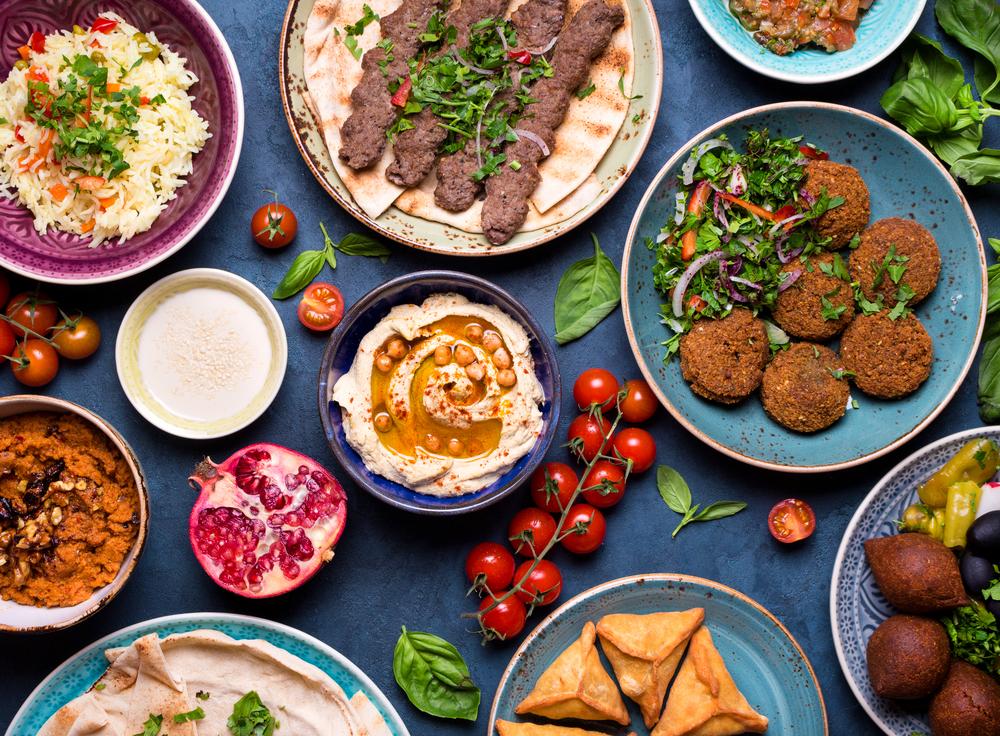
There are many beautiful (Halal, or “permissible“) foods mentioned in the Holy Quran, many of which you will often see at the table of Muslims around the world.. In this post we will delve into the ten foods Muslims are permitted to eat according to the Quran’s teachings.
This is important because the principles of Halal play a very important role in the life and practice of every faithful Muslim. It determines what they purchase at the grocery store, what goes on the dinner table, and even what they might order at a restaurant. Understanding these guidelines helps ensure that Islamic dietary practices are followed.
First, let’s answer the most important question:
What is Halal Food?
Halal is an Arabic word which means “permissible.” In an Islamic context, Halal describes that which is permissible under the Sharia (Islamic law), more often than not regarding food and behaviour. In many an instance, following Halal guidelines is a way for many Muslims to ensure that they lead a life that is pure and faithful to God, Allah.
Some basic rules of Halal food include the prohibition of consuming pork or anything deriving from pigs, as well as the use of alcohol. Halal meat must be from a Halal animal (i.e. chicken, duck, goat, cow, lamb) that has been sacrificed in a particular way, with the name of God (Allah) recited in the process.
According to Islam, the sacrificing of an animal is done in the name of Allah and by the norm specified for that particular type of meat. When this is done, the meat is described as “zabiha” or “dhabiha“.
You tell them: “In all the commands revealed to me, I find nothing which men have been forbidden to eat except carrion and running blood and flesh of the swine for it is unclear, or meat consecrated in the name of some other than God, which is profane. But if one is constrained to eat of these without craving or reverting to it, then surely your Lord is forgiving and kind.”
Al-Quran 6:145 (Al-Anam)
The Holy Quran, which is the holy guidebook for all Muslims, provides overall guidance on Halal foods. It does not really list each and every food to be consumed, but it gives a very good framework. In essence, there are way more foods that are Halal (permissible) than are Haram (prohibited). For example, Muslims can eat a large variety of meat, seafood, dairy, fruits, and vegetables.
It is through understanding the basics that you can choose things that are in line with Islamic teaching. Whether you are a Muslim or you are just interested in the Halal way of living, this general guide from the Quran definitely comes in handy in one’s daily life.
Islamic teachings also recommend reciting certain Du’as (supplications) before starting a meal. You can read the dua before eating and others, or simply say “Bismillah” (in the name of God) just before eating.
10 Halal Foods in the Quran
Here are ten foods mentioned in the Quran and an exploration of why they’re valued in Islamic tradition and how they’re used in everyday life.
Honey
Honey is well known in the Quran for being sweet and deliciously healthy. In the Quran, Surah An-Nahal (16:68 and 16:69) mentions that honey comes from bees’ bellies. Honey is a natural energy source and an antibiotic; thus, it becomes a household element in most Islamic homes. It is usually taken in drinks or desserts as a sweetener to resolve minor illnesses.
Dates
Another well-known type of halal food referred to in the Quran is dates. In Surah Maryam (19:25), there’s a story where Maryam A.S is asked to shake a palm tree, resulting in ripe dates falling. Dates mark people’s hospitality and are usually used to break the fast during Ramadan, specifically, Iftar. They are highly fibrous, rich in natural sugars, and give immediate energy.
Olives
Olives do have a unique space within the realms of Islamic culture. In Surah An-Nur (24:35), the olive tree is termed “blessed.” Olives and olive oil are used in cooking and cooking food, serving as a very healthy way of fats. Similarly, olive oil is sometimes used for some Islamic practices due to its cleansing nature. People can eat olives as a snack or add them to different food recipes to enhance the flavors.
Milk
In Surah An-Nahal (16:66), milk is tackled as belonging to the class of pure things. It is categorized as a drink from the midst of “digested food and blood,” yet it is pure and good. Milk is an essential and significant source of calcium and protein, so it is always included in breakfast and other meals. It is also used in various desserts and beverages.
Grapes
The Quran itself refers to grapes in Surah Al-Baqarah (2:266), among the gardens, which are many in number. Grapes can be eaten in a fresh state or sun-dried to become raisins. Grapes are high in antioxidants and are used to make juice, a favorite non-alcoholic beverage Muslims consume. Besides, they form a healthy snack and can be included in several foods.
Pomegranate
For Muslims, the pomegranate is considered a fruit from paradise, as described in Surah Ar-Rahman (55:68). It is trendy today, especially with its bright red seeds and sweet-tart flavor. Pomegranates are highly nutritious and contain many antioxidants and vitamins. They are often eaten plainly or squeezed into juice but can also be included in salads and desserts.
Fish
Although some schools of thought may differ on the types of seafood permitted to eat, most seafood, if not all, is considered Halal. In Surah Al-Kahf (18:61 and 18:62), the story of fish proves that one can eat it. Fish is a bountiful source of omega-3 fatty acids and is valued for lean protein content. Muslims enjoy a variety of seafood dishes, from grilled fish to seafood stews.
Vegetables
The Holy Quran has designated the role of vegetables within the diet in chapter 2, verse (2:61). Vegetables are very versatile in nature and are considered a part of a balanced diet. They are, by and large, a good source of fiber, vitamins, and minerals, which is why they make for a healthy component of the Muslim diet. Every day, vegetables such as carrots, cucumbers, and tomatoes are used to prepare salads and dishes.
Lentils
Lentils are referred to in Surah Al-Baqarah (2:61); therefore, the pulse is significant in Islamic dishes. More so, it is an acceptable substitute for the source of obtaining plant proteins, and it is used in almost all kinds of soups and stews. Being cheap and versatile, they give a filling answer to the meal. Lentils are one of the most common ingredients in most homes of Muslims, especially in making vegetarian and vegan dishes.
Meat (From Halal Animals)
The Quran further explains the meat of Halal animals in Surah Al-Ma’idah (5:1). Meat is considered halal when taken from properly slaughtered animals in the name of Allah. The process makes the meat permissible. It includes the meat of sheep, cows, and chickens, even camels. The meat of an animal goes into the preparation of almost all kinds of traditional Islamic foods and typical dishes such as kebabs and biryani.
Conclusion
In other words, the Quran offers clearly defined Halal food provisions and provides many options for enjoying it. From the sweet honey and dates to the nutritious milk and the meat taken from those animals, all these give a variety that can be consumed as per the teachings of the Quran. This understanding helps Muslims make dietary decisions that align with their faith.
Whether you are a Muslim or want to know more about the practice of Halal, knowing these 10 Halal foods gives insight into a rich tradition. They are the surest way to a balanced and healthy diet, which, of course, is not only suitable for religious reasons but also a delightful experience. Thank you for taking this journey into Halal foods with us.
This post may contain affiliate links, which means that I may receive a commission if you make a purchase using these links. As an Amazon Associate, I earn a commission from qualifying links.
Truthfully, I was hesitant to dive in because I knew it would take me to a dream world I might not ever get back to in real life. When I lived in Turkiye and traveled along the Aegean Coast, I was always trying to get to Ikaria, but could never make it.
The adventurer inside of me remembered my young self..
When I was just 19 years old, I became a solo traveler through Europe, by accident. I was visiting my family in Sicily when I got the travel bug to see more and more, so I hopped on a train to Bari and took a ferry through the Adriatic and landed on the island of Corfu.
This was way back before the internet, blogs and social media hailed the glories of solo travels, women solo travelers especially, and all the hot spots to take a selfie. Instead, I was able to peacefully take photos, meet incredibly warm local villagers who showed me their gardens and invited me for fresh home-grown watermelon. I ate the purest seafood directly from Aegean, unseasoned vegetable salads that actually taught me what cucumbers are supposed to be, and spoke to village Yaiyas about their secrets to reaching old age in such a healthy way. One told me to always peel your cucumber!
While enjoying my little cup of Greek coffee and a village breakfast high up in a mountainside home for just $12 USD per night, I wrote in my diary (not a laptop or cell phone notes) a vow to myself that I would someday make a life for myself in the Mediterranean. To live in this simplicity. In this healthy air. To have neighbors, friends and family that were just as kind, happy, quiet and hard-working as the people of Corfu.
Fast forward to now and my life looks nothing like that. I broke all the promises to myself about living in the Mediterranean. I’ve tried and feel like I failed, but I have learned to cook some pretty great things.
And I’ve learned to bring the Mediterranean lifestyle with me wherever I go, as much as I possibly can.
One way I do that is to eat as many greens as possible. To get as much sunshine as possible. To keep inspiring myself with stories, books, and recipes about the Mediterranean so that I can share that with all of you.
So I wanted to bring you a recipe this week that invokes both sides of the Aegean Sea, yet shared in both Greece and Turkiye. This is my specific take on it, my version, with the greens that I could find: Aegean Village Greens Pie. It’s not a sweet “pie”. Pie in this culinary cultural context is savory.
Aegean Village Greens Pie
Serves 6
I always tell people not to be intimidate by fillo dough. It’s much more forgiving than you think. I’m not including a recipe for homemade fillo dough now, because first I want you to get used to sourcing and cooking- and enjoyably eating those greens!
First, go out and look for greens- not just spinach. I promise you, you’ll find them. Also, spring onions and leeks (leave out the leeks if you can’t find them, it’s okay):
Spinach
Dandelions
Beets (you’ll use only the greens)
Swiss Chard (any variety)
Spring onions
Leeks
Next, I want you to look for fresh herbs and onions. Please try to avoid dried herbs for this recipe, except for dried thyme.
Dill
Parsley (flat leaf, if possible)
Mint
Next, I want you to find the creamiest feta cheese possible:
For me, the best one is the Macedonian style feta cheese (more readily found in Canada). You can use other types of feta, but in my opinion most are way too dry except for perhaps the Valbreso brand French Feta Cheese, which is more easily found in the U.S. I think I may have even seen it at Costco…
*I used Sotidakis Goat Feta Chevre (from Costco) once and it was good, but not moist enough for this recipe, in my opinion.*
If you can’t find either, then so be it – just use what you can find.
Lastly, find a good fillo dough (in the freezer section of most Mediterranean and Middle Eastern markets, as well as most grocery stores). My go-tos are Fillo Factory Organic or Krinos, but you can really use any that work for savory pies. Just make sure they’re not shaped like a triangle or molded into cups- that’s for other types of fillo dishes. You’re going to bring the fillo home and put it in the refrigerator. But not for too many days (3-4 days tops), otherwise it will start to get moldy.
You’ll probably have the rest of the ingredients on hand at home, but just in case:
A really great quality olive oil (that should be part of your cooking at all times, anyway, not just for this recipe). Might I be a little bit proud and mention our beloved Oil of Anatolia from Turkiye?
Farm fresh eggs
Black seed or sesame seeds (whichever you wish to top the spinach pies with)
Milk, for mixing with oil or butter, to wash the fillo
Silicone pastry brush
Rectangular deep pan (i.e. lasagna pan is good but a bit large). Round pans are okay but you’ll have to fanagle the fillo, which can be annoying
Measurements of Ingredients:
Approximately 3 cups cooked greens mixture (see below)
Fresh or dried garlic or garlic powder (optional)
All fresh herbs, washed, dried and roughly chopped
1-2 eggs (1 large or 2 small)
3/4 cup Feta cheese
1 teaspoon crushed black or white pepper
dry thyme or oregano (1-2 teaspoons)
1/2 teaspoon salt (optional)
1 packet fillo (also spelled “phyllo”) dough, thawed in the refrigerator
Directions for Assembling and Baking:
HOW TO COOK THE GREENS
Wash and dry all the greens and onions. If using, chop the stems of any Swiss chard finely. If using spring onions or leeks, use the white parts for this recipe by chopping them finely.
In a small saute pan or pot, gently heat the olive oil. Add the onions then the stems or hardy parts of any of the greens. If you want you can add garlic (1 clove fresh) or garlic powder (1/2 teaspoon), too. Cook down until softened and set aside to cool completely.
ASSEMBLY & BAKING DIRECTIONS
To a large bowl, add the greens. Add the herbs, eggs, feta, pepper and dried oregano or thyme and mix well. If necessary, add salt. Set this bowl aside.
Prepare one cup of warm milk and add a generous drizzle of olive oil to it You can also/alternatively add a tablespoon of melted butter. This will be your wash for each layer of the fillo dough. Preheat the oven to 425 F.
To the bottom of the baking pan, brush it generously with olive oil only.
Open the packet of fillo dough. It will be large and rectangular. Cut it in half vertically so that you have two sections. Keep one out to work with and cover the other half with a damp towel. These pieces should fit the size of the pan with which you’re working.
Brush the first layer with the milk-olive oil/butter. Continue to do this with each and every layer of this first half of fillo sheets. When you have finished the first half, pour the cooked greens/feta/egg mixture on top and level it flat with a spatula. Drizzle olive oil on top generously.
Continue to use the other half of fillo sheets and brush each layer with the milk-olive oil mixture until you get to the very last layer on top. Drizzle the top generously with olive oil. Sprinkle sesame or black seeds on top and bak in the oven for 30-35 minutes.
Let cool a few minutes before cutting. Serve with a fresh cucumber-tomato-olive salad, if desired.Καλή όρεξηKalí órexi / Afiyet olsun! Share Everyday Mediterranean by Yvonne Maffei if you’d like to subscribe to my culinary newsletter on Substack.