![Arroz con Gandules | Puerto Rican Rice with Pigeon Peas]()
by Yvonne | Mar 4, 2013 | Gluten-Free, Puerto Rican, Rice & Grain Dishes, Vegetarian
I grew up eating arroz con gandules, that quintessential rice dish that every Puerto Rican family has their own version of making. Most of the time it was made con pollo, or with chicken, but it was also made vegetarian, too. My mom is an American-born Puerto Rican whose family was very traditional in their foodways so this dish was always at the table of family gatherings.

I remember my great aunt, Virgen (whose name was pronounced in the dialect as “Beehin”) used to make it every single time we went to her house to visit. As soon as she heard we were on our way, she would whip it up quickly and serve it to us with a coke (and I had already usually just eaten a full meal of Sicilian meatballs and pasta at my Sicilian grandparents’ house just before visiting). (more…)
![Stuffed Chayote with Carne Molida | Caribbean Squash with Ground Beef]()
by Yvonne | Dec 14, 2010 | Dinner, Latin, Puerto Rican, Red Meat Dishes, Side Dishes
 How do you decide which recipes to make daily or on special occasions? What sparks your interest? A good photo? A mouth-watering description in a cookbook? The smell of a particular food coming from a neighbor’s house? A memory of someone?
For me, it’s usually a little bit of each, but this time tidbits of stories about my abuelita {grandmother} motivated me to hunt down chayote {a Caribbean squash}, stuff it with seasoned carne molida {ground beef} and serve it how she might have from her mountain home of Orocovis, Puerto Rico.
The background story is that my grandmother was an exceptional cook, someone who could whip up a meal with just a few ingredients on hand. I have some memories of her, but never of her cooking. I only remember her while she infrequently visited here in the States. She came with bundles of guava candy, coconut candy, and savory pasteles. I never knew how much people loved her food.
Until recently.
(more…)
![Summer Guava Drink]()
by Yvonne | Jul 29, 2010 | Drinks, Puerto Rican, Summer
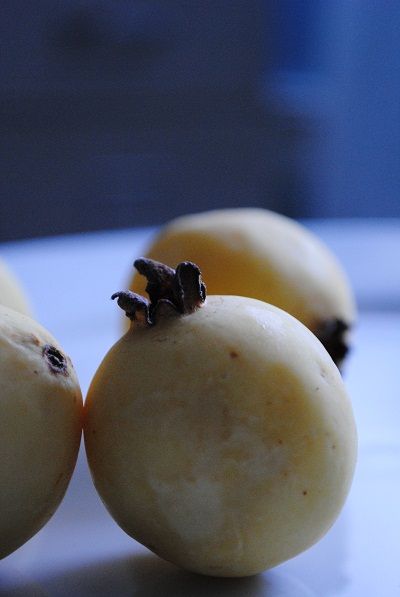 I grew up drinking guava nectar, my first real introduction being rare, but exciting trips to a Puerto Rican corner store with my mother. She would spoil me with tiny bananas, coconut candies and other goodies not found in our neighborhood stores. Opening up a can of Goya drinks, be them mango, pera (pear), or guyaba (guava) would evoke a keen sense of exotica in my mind. I knew instinctively at a young age that these flavors flourished in a place my mother loved, a place I was somehow connected to.
To this day, when I smell these fruits, I’m instantly taken back to the days spent excitedly waiting to see my abuelo (grandfather) in the barrio (neighborhood) where he made sure we had whatever Puerto Rican delicacies we craved; and to the moments my abuela (grandmother) stepped out of the plane as she arrived from San Juan, with piles of pasteles (savory meat tamales wrapped in banana leaves) and dulce de guyaba (guava candy) para los niños (for the kids).
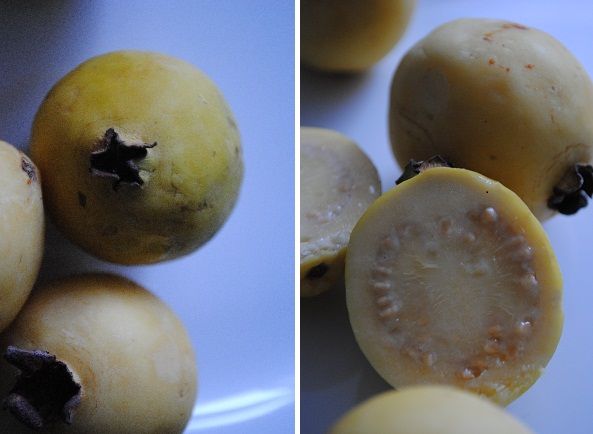
I am fortunate enough, alhamdullilah (thank God), to live in a city like Chicago where I can find just about any Caribbean fruit and product I crave from my childhood. Recently, I found the guava pictured here. I have to admit- I bought them simply because of the nostalgia that the smell stirred inside of me. I didn’t know what I wanted to do with them, other than embrace the memories of my childhood and some of the people I love the most.
When you can find it ripe, guava should have a lovely, fresh, almost flowery scent. Just be sure to strain the drink with a fine sieve or you may be crunching on the seeds as you drink.
I did end up making this delicious drink, a recipe I think you’ll find refreshing and flavorful. What foods evoke your childhood memories?
Serves 2
Ingredients
1 medium grapefruit
2 small yellow guavas
¼ cup orange juice
1 tsp. powdered sugar
1/8 cup water
Directions
Remove all the outer tough skin from the grapefruit and the white skin underneath it. Remove the seeds, too, otherwise the drink will be very bitter.
Remove the stem from the guava and wash the outer part very well. There is no need to remove the skins.
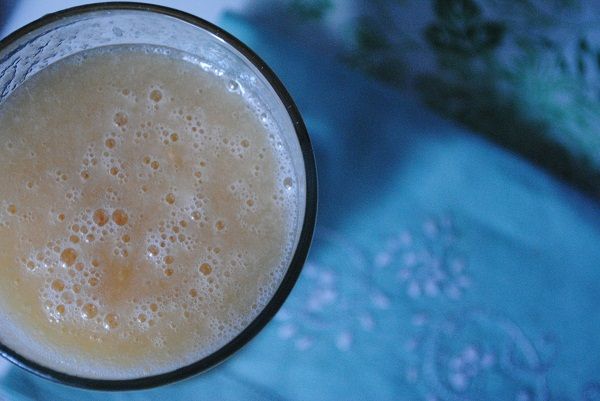
Add all the ingredients to a blender and combine on high speed for about 30 seconds- 1 minute. (To make this drink cold, add some ice before blending)
Pour the drink through a fine sieve or strainer before drinking in order to remove the hard seeds of the guava.
![Black Beans Without the Lard]()
by Yvonne | Mar 29, 2010 | Gluten-Free, Latin, Mexican, Puerto Rican, Vegetarian
Black beans, or frijoles negros, are my absolute favorite type of beans beans, not only because I think they taste so wonderful, but also because in my opinion and experience, they are the easiest ones to cook without ruining. In other words, they are forgiving in that they give off this creamy texture that I just love and crave.

When sour cream (crema) is added to them, they are even better. You can have them in soups, as a side dish or mashed up and re-fried with a little oil and onions. If you’ve never had them before, now is the time to try.
I love these so much, I might secretly be accused of being Cuban instead of Puerto Rican only because black beans are much more prominent in Cuban cuisine than in my ethnic Puerto Rican one. I don’t care- they’re wonderful!
Frijoles Negros (Black Beans)
Serves 8
This is just one of the ways I make them. You can start from this recipe and shake things up with your own favorite additions.
Ingredients
1 tablespoon olive oil
1 medium yellow onion, finely diced
1 can (15.5 oz) black beans or 2 cups fresh beans, soaked overnight and cooked until done, liquids reserved.
1 teaspoon ground, dried epazote (Mexican herb similar to cilantro). Substitute fresh cilantro if you don’t have the epazote.
sea salt and ground black pepper, to taste
1 tablespoon sofrito
Directions
In a medium sauté pan, heat olive oil. Add onions and cook until translucent, about 3-4 minutes.
Add cooked beans and their liquid to the pan. Add epazote, salt and pepper. Stir in the sofrito. Bring to high heat, then reduce quickly to a simmer, preferably for 1-2 hours. Simmer or keep warm until ready to serve.
Serve over a bed of plain white rice or any dish you prefer.
Bismillah y Buen Provecho!
Great Resources on Halal Cheese, Dairy and Mexican foods:
Check out the links under the Halal Cheese & Dairy category listed on the front page of My Halal Kitchen.
On our Eating Out page there’s a whole bunch of information on how to be sure you’re not ordering pork when out for Mexican food.
What do you do to your ‘frijoles negroes’ to make them uniquely yours?
![Fried Yucca]()
by Yvonne | Feb 1, 2010 | Puerto Rican, Side Dishes
 If you’ve never heard of yucca before, you heard about it here first! Also known as cassava or manioc, yucca is a tuberous, hardy and starchy root found in tropical climes such as Africa, Southeast Asia, southern China and the Caribbean, but also known to be a staple food consumed by the Native Americans and pre-Columbian people hundreds of years ago. You may be most familiar with the flour- also known as tapioca, which is made from its roots.
It’s also good for you- its high in calcium, phosphorus and vitamin C.
I usually make yucca mashed like potatoes with only the addition of butter and salt. It has such a creamy flavor, you might even prefer it over mashed potatoes like I do. I recently decided to make fried yucca, a decision I was happy about. It was so delicious and even satiated that craving for french fries!
 Fried Yucca
Serves 4
Ingredients
1 long yucca root
4 Tb. extra virgin olive oil
salt, to taste
Directions
- Boil yucca in a large pot of water for approximately 45 minutes, or until very soft. Poke with a sharp knife to make sure it’s thoroughly soft.
- Allow to cool then remove thick outer skin as well as thin, stringy cord in the middle.
- Roughly chop into semi-thick pieces.
- Heat olive oil in a large sauté pan. When oil is hot, add the yuca pieces and salt. Sauté until brown on one side, approximately 3-4 minutes.
- Turn each piece over carefully, using a fork or even a fish spatula. Heat the other sides for an additional 3-4 minutes.
- Place on a plate with paper towels to absorb the extra oil, if any.

Enjoy as a side dish to fish, meat or as a stand-alone snack.
![Homemade Sofrito and Recaito]()
by Yvonne | Jun 9, 2009 | Latin, Puerto Rican
If you come from a Puerto Rican family, you understand that Goya products are permanent fixtures in our kitchen cabinets- without them it seems like a part of the family is missing. Why are we so dependent on them? Maybe it’s because Goya is one of the few brands on the market completely catering to an Hispanic consumer market–and we appreciate that. But depenedence on convenience isn’t always a good thing when it comes to cooking, especially when you’re concerned about high sodium, preservatives or the origin of ingredients.

In the past, whenever I attempted a Puerto Rican recipe that said to make the seasoning or sauce bases from scratch, I was pretty confused as to why the products in the Goya bottles looked so different from the homemade versions. I wanted to make the traditional arroz con pollo (rice and chicken) completely homemade without any preservatives, but after reading a couple Puerto Rican cookbooks or handwritten recipes from family, I realized that ingredients and measurements for seasoning bases like sofrito and recaito were as different from author to author as the amount of Spanish dialects that abound- not too many, but just enough to get slightly lost in translation.
Fortunately, I had some help from mom, my cousin, and from Puerto Rican chef Daisy Martinez. On her show, Daisy Cooks, she really sealed the deal by convincing me not only was it easy to make your own sofrito and recaito base flavorings, but that their uses are so versatile it’d be a shame not to make them yourself. In fact, sofrito is actually used in Spanish, French and Italain (sofritto) cooking- I mistakenly thought it was unique to Puerto Rican cuisine.
Basic Sofrito
Here’s what I came up with that sort of combined everything the books and the cooks told me. The amounts are a lot more than needed to season one pot of rice, but that’s what freezer ice cube trays are best used for. 1-2 cubes is what I use per 2 cups of rice. You can use more or lesss, depending on how much you like the flavor. Just be sure to label your freezer trays or containers if you are making both of the seasonings- it’s hard to tell the difference once they’re frozen! Use in rices, soups, to flavor meats and even fried or scrambled eggs- absolutely delicous! Feel free to halve, double or even triple the recipes- you won’t mess up anything!
Ingredients & Directions
1 white onion, diced
2 Italian frying peppers or cubanelle peppers, roughly chopped
8-10 cloves of garlic, peeled
1/2 bunch cilantro
2 culantro leaves (if you can’t find these, just double up on the cilantro)
2 plum tomatoes, preferably without the skin, roughly chopped
1/2 large bell pepper, roughly chopped
Directions
Clean all ingredients very well. Put everything in food processor or blender and mix until all ingredients are completely blended together. Lasts several days in the refrigerator, but if you won’t use right away, freeze and remove as necessary.

Basic Recaito
Ingredients
Directions
Clean all ingredients very well.
Put everything in food processor or blender and mix until all ingredients are completely blended together. Lasts several days in the refrigerator, but if you won’t use right away, freeze and remove as necessary.
Bismillah y Buen Provecho!
Related Posts
Frijoles Negros (Black Beans) Made without Lard
More Information on Eating Out Halal at Latin/Mexican Restaurants
